Introduction to Spanish Dialects
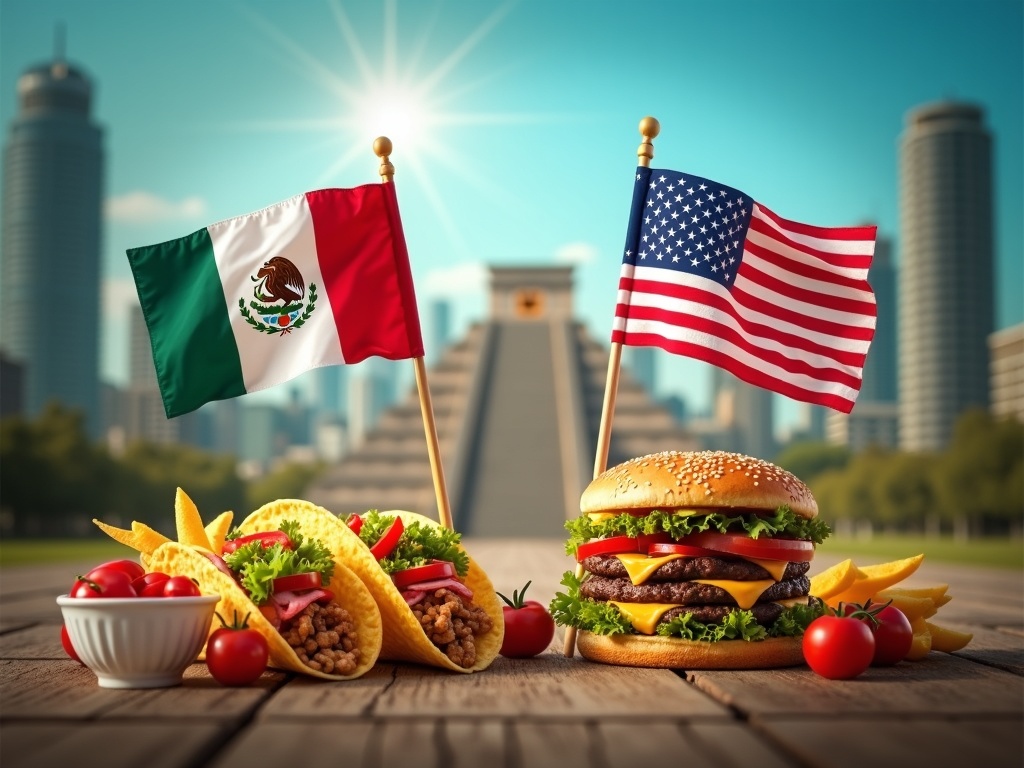
Understanding the intricacies of regional dialects in the Spanish language is not just an academic exercise—it’s a key component in achieving effective communication and deeper cultural appreciation among the diverse Spanish-speaking populations. Spanish, the second most spoken language in the world, exhibits a vibrant tapestry of dialects evolved from geographical, historical, and social dynamics. The focus here narrows down to two prominent varieties: Mexican Spanish and American Spanish. These dialects showcase distinctive features shaped by their unique historical and cultural landscapes.
Historical Context of Mexican and American Spanish
Spanish first voyaged to the Americas with the explorers in the late 15th and early 16th centuries, planting the seeds for a variety of dialects seen today. In Mexico, the Spanish language encountered a complex linguistic landscape populated by indigenous languages like Nahuatl and Maya. These languages influenced Mexican Spanish not just lexically but also phonetically. In contrast, American Spanish evolved over centuries predominantly through waves of immigration from various Spanish-speaking countries in the latter part of the 19th and throughout the 20th centuries. Regions like the Southwest, Florida, and New York saw Spanish morph through its interaction with English and other immigrant languages, creating a distinct American Spanish dialect.
Pronunciation and Phonetic Differences
The pronunciation and phonetic distinctions between Mexican and American Spanish are subtle yet noticeable. For instance, the pronunciation of the letter ‘s’ often softens in the Caribbean influences of American Spanish, tending to sound almost like an English ‘h’ in some contexts. Mexican Spanish, comparatively, maintains a clearer and more consistent ‘s’ sound, especially in central and northern regions.
- Diminutive Forms: The use of diminutive forms also varies, with Mexican Spanish favoring ‘-ito’ or ‘-ita’ (casita for small house), whereas American Spanish might use these less frequently.
- Intonation: Intonation patterns also reveal differences; Mexican Spanish generally has a more melodic rise and fall, while American Spanish, particularly in the presence of English, may adopt a more monotone pattern.
Grammar Variations
Grammar in Mexican and American Spanish shows fascinating variations. One prominent feature is the use of the second person singular. In parts of Mexico, ‘tú’ is commonly used, but ‘vos’ can be heard in Mexican dialects influenced by Central American countries. In contrast, American Spanish predominantly sticks with ‘tú’ due to its modern standardization through educational systems and media.
- Verb Conjugations: Tenses and verb conjugations reflect another area of divergence. Mexican Spanish often uses the past simple tense, whereas American Spanish might prefer the present perfect, indicating a subtle nuance influenced by English.
- Articles: The usage of definite and indefinite articles in sentences sometimes aligns closely with English constructs in American Spanish, showcasing a syntactical shift influenced by bilingualism.
Vocabulary and Lexical Differences
Lexical choices significantly mark the divergence between Mexican and American Spanish. Words for everyday objects can differ; for instance, the word for car can be ‘carro’ in Mexico and often ‘auto’ in the U.S.
- Regional Slang and Idioms: Slang also varies greatly, with Mexican Spanish using words like ‘chido’ (cool) and American Spanish perhaps opting for ‘chévere’, used in the U.S. by influences from other Latin American countries.
- English Influence: The influence of English on American Spanish vocabulary is profound, injecting direct translations and hybrid words such as ‘parquear’ (to park) and ‘troca’ (truck), enriching the American Spanish lexicon in unique ways.
Cultural Influences on Language
Cultural phenomena distinctly shape language evolution in both Mexican and American contexts. Media and entertainment significantly influence colloquial phrases and local expressions. For example, Mexican Spanish might include unique colloquialisms shaped by traditional media like telenovelas, while American Spanish incorporates terms reflective of a broader Hispanic identity spanning multiple countries.
- Expressions and Colloquial Phrases: Phrases like ‘¿Qué onda?’ (What’s up?) are prevalent in Mexico, whereas ‘¿Qué pasa?’ might be more common in the U.S., showcasing subtle cultural nuances.
- Language Evolution: The dynamic interplay of cultures, especially in the U.S., creates a constantly evolving language landscape where Spanish mingles with English and other languages, creating a vibrant, adaptive form of Spanish that accommodates its diverse speakers.
To understand “Mexican vs. American Spanish: What’s the Real Difference?” it is essential to delve into these linguistic layers. The distinction spans pronunciation, grammar, vocabulary, and the profound influence of cultural forces, highlighting the rich diversity within the Spanish-speaking world—a world where language continues to evolve and respond to its speakers’ realities.
Influence of Technology and Media on Spanish Variations
Technology and media significantly shape the linguistic landscape of Spanish speakers. The influence of digital platforms in the diffusion and adaptation of language is powerful, especially among the young populations in Mexico and the United States. Televised content, particularly from media powerhouses such as Univision and Telemundo in the U.S., and Televisa and TV Azteca in Mexico, continues to present regional dialects to a broader audience, inadvertently standardizing certain speech patterns.
Furthermore, social media platforms like Twitter, Facebook, and Instagram serve as arenas for language evolution, where users often adopt and create new slang and expressions that can become ingrained in everyday language. These platforms not only disseminate cultural expressions but also help bridge the communication gap between speakers of Mexican Spanish and American Spanish, fostering a hybrid dialect that can be observed in online interactions. The rapid exchange of information online allows for a dynamic interaction between these two variants, leading to a continual evolution of the language.
Current Trends and Statistics in Dialect Usage
As of 2026, there are approximately 37 million Spanish speakers in the United States, with a significant number exhibiting fluency in varieties influenced by their heritage, including Mexican Spanish. Meanwhile, in Mexico, the Spanish language continues to integrate indigenous languages and dialectal variances, characterizing a rich linguistic tapestry. Recent studies show a fascinating trend: the number of bilingual Spanish-English speakers in the U.S. has increased by over 20% in the past three years, underlining the commitment to preserving heritage languages.
Research on language preservation among immigrant populations in the U.S. indicates a trend toward bilingualism, with a strong preference for maintaining the use of Spanish at home, thus preserving their Mexican linguistic roots. According to a 2025 survey, about 76% of Hispanic families prefer speaking Spanish during family interactions, reflecting a profound connection to their cultural identity. Furthermore, educational initiatives aiming to bolster Spanish language skills among American Hispanics highlight the adaptation of linguistic resources to accommodate both Standard Spanish and regional varieties such as Mexican Spanish.
Linguistic Identity and Perception
The dialect a person uses can significantly influence their social identity and community belonging. In Mexican communities, for example, particular dialects can suggest a rural or urban upbringing, influencing perceptions. On the other hand, in the U.S., speaking Spanish often ties individuals to a broader Hispanic identity, although specificities of dialect—Mexican versus other Latin American variants—also play a crucial role in more fine-grained social identity and group membership.
This dual perception impacts not only personal identity but also the value ascribed to different linguistic forms. In some communities, Mexican Spanish is seen as being closer to ‘pure’ Spanish, especially among first-generation immigrants. In contrast, second-generation Spanish speakers in the U.S. might be influenced more by American culture and language, leading to a blend that carries less prestige among purists but is invaluable in cross-cultural communication and identity. Recent studies highlight that about 65% of second-generation Spanish-speaking youth in urban areas may code-switch—a practice of alternating between Spanish and English—reflecting their dual identity.
Case Studies: Real Life Applications
Consider a multinational company with offices in both the U.S. and Mexico. The differences in Spanish communication styles can lead to misunderstandings or inefficiencies. For example, a marketing campaign designed in the U.S. might use terms or phrases that are misunderstood by a Mexican audience, or vice versa, impacting the campaign’s effectiveness. Recent marketing research indicates that campaigns tailored to specific dialects can increase engagement by up to 40%, demonstrating the importance of cultural awareness in business strategies.
In education, teachers who understand these differences can tailor their lessons to better serve students from varied backgrounds. In a Los Angeles school with a significant number of Mexican immigrant students, educators have implemented bilingual programs that respect and incorporate Mexican Spanish, thus fostering an inclusive environment that respects students’ linguistic heritage. A study from 2025 noted that students participating in such programs showed a 30% improvement in language proficiency compared to their peers in traditional English-only classrooms.
Emerging Technologies and Their Impact
As technology continues to advance, new tools and applications are being developed that can further disseminate language variations. Language learning apps like Duolingo and Babbel have started incorporating regional dialects, providing learners with a broader understanding of Spanish as it is spoken in various communities. These platforms harness artificial intelligence to adapt teaching methods based on user responses, encouraging a tailored educational experience that outlines the nuances of Mexican versus American Spanish.
Moreover, voice recognition technology and translation applications have made it easier for individuals to communicate across dialect boundaries. For instance, Google’s Translate app now offers dialect-specific translations, helping speakers navigate conversations that might otherwise be challenging due to different regional expressions. This integration of technology aims to break down barriers and promote understanding among Spanish speakers worldwide.
Conclusion
Understanding the differences between Mexican and American Spanish is not just about learning two varieties of the same language; it’s about appreciating the rich cultural narratives and identities that each carries. In our increasingly globalized world, such knowledge is paramount in fostering not only effective communication but also mutual respect among speakers from diverse backgrounds.
The nuances of Mexican and American Spanish enrich the tapestry of linguistic expression and offer an invaluable resource for cultural and social interaction. By embracing these differences, speakers and learners of Spanish can engage more deeply with the Hispanic world’s varied facets, contributing to a richer, more nuanced global conversation. Educational systems, businesses, and individuals who prioritize cultural and dialectical understanding will not only improve their communication strategies but also enhance their connections with communities that enrich the international landscape.
Leave a Reply