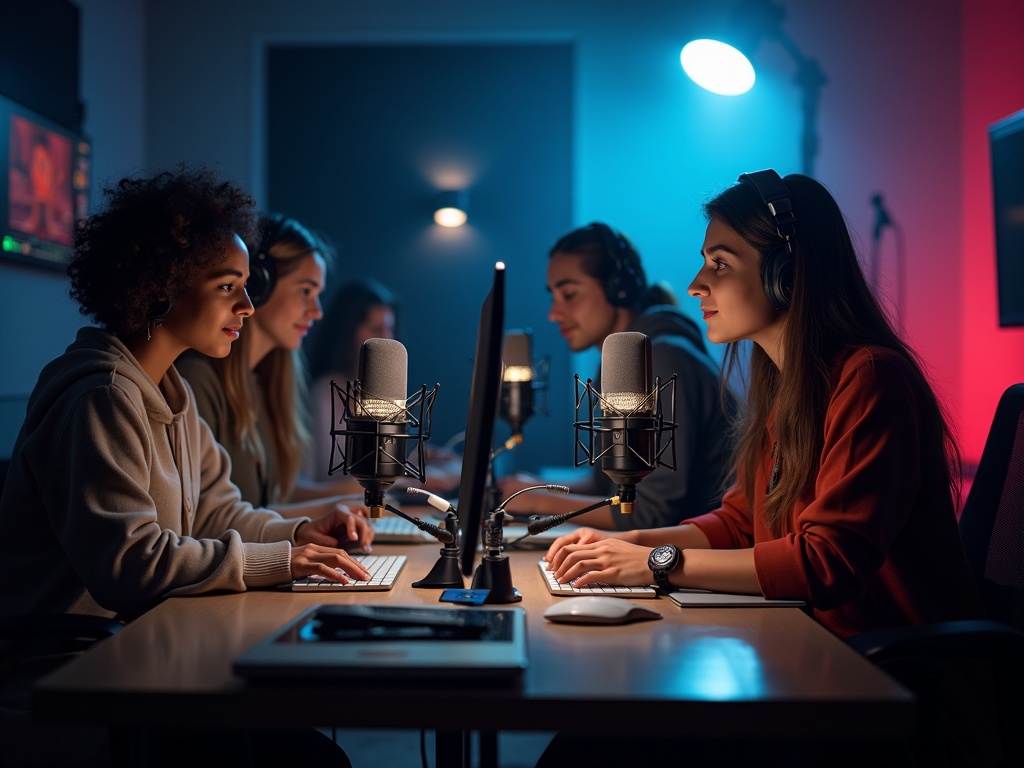
Introduction to Voice Cloning
Voice cloning, a technological innovation, harnesses artificial intelligence and machine learning to synthesize and replicate human speech. This advanced process goes beyond mere text-to-speech services by capturing the nuances, tone, and emotional inflections of the source voice, creating almost indistinguishable audio results from the original. The roots of voice cloning trace back to the early efforts in speech synthesis during the mid-20th century. However, significant strides have been made in recent years, particularly with the integration of deep learning techniques, which have drastically improved the accuracy and realism of cloned voices.
In today’s digital era, voice cloning finds a crucial application in content localization, helping content creators like YouTubers adapt their material for global audiences without losing the authentic sound of their original voice. By 2026, the technology has evolved to be a key player in breaking down linguistic barriers in multimedia content.
The Importance of Localization in Global Content Strategy
For content creators aiming for a global reach, localization is paramount. Localization involves adapting content to meet the language and cultural nuances of different target markets. For YouTubers, whose platform knows no geographic bounds, localization is not just about subtitles; it’s about fostering a deeper connection with the audience.
Recent statistics from a 2026 study reveal that localized videos see a 40% increase in user engagement compared to non-localized counterparts. Moreover, viewers are 80% more likely to watch a video through to the end if it is in their native language, highlighting the significant impact of localization on viewer retention rates.
While subtitles have long been a standard tool for addressing diverse audiences, voice cloning presents a dynamic solution where creators can maintain their unique vocal identity across various languages, critical for personal branding and viewer recognition.
How Voice Cloning Works
At its core, voice cloning involves a few critical steps. Initially, the voice of the individual is recorded to create a comprehensive audio sample. This sample is then analyzed by deep learning algorithms to understand various speech patterns, intonations, and other unique characteristics. This process generates a voice model, which can then be used to synthesize speech from text inputs in the creator’s original style.
Several tools have emerged in the market to facilitate this, each offering varying levels of sophistication and realism. Key players include Descript’s Overdub, iSpeech, and Modulate. These platforms provide user-friendly interfaces that democratize access to voice cloning technologies, making it possible for independent creators to utilize this advanced tech without requiring deep technical expertise.
Voice Cloning Applications in YouTube Content
The practical application of voice cloning in YouTube content is transformative, allowing creators to publish multilingual content with ease. A notable example involves a YouTube creator who used voice cloning to translate their English DIY tutorials into Spanish and Mandarin. This expansion resulted in a 150% boost in engagement from these regions within just three months.
However, the process isn’t without its challenges. Engagement metrics show that while cloned voices can attract viewers, maintaining their attention requires a high level of audio quality and cultural relevance in the voice tones used.
Moreover, voice cloning raises significant ethical questions. There is an ongoing debate about consent and the potential for misuse, such as replicating someone’s voice without their permission. These aspects underscore the importance of navigating this technology with a clear ethical framework and respect for personal identity rights.
Challenges of Voice Cloning for Content Localization
Despite its benefits, voice cloning in content localization presents various practical and ethical challenges. On the technical front, creators often face issues related to the uncanny valley effect, where the cloned voice is close-to-real but slightly off, which can sometimes unsettle listeners. Achieving perfect emotional congruence in synthesized voices, particularly for complex emotions, remains a challenge.
From an audience’s perspective, acceptance varies by culture and demographic. Older audiences may show skepticism towards synthetic voices, preferring human narration, impacting the overall acceptance of AI-generated content.
On the legal landscape, the use of voice cloning technologies intersects with copyright laws and personality rights, requiring creators to navigate a patchwork of regulations that can vary significantly between jurisdictions.
Emerging Trends in Voice Cloning Technology
Emerging trends in voice cloning technology point towards more sophisticated AI models capable of even greater nuances in speech and emotional conveyance. Innovations such as emotional AI, which can detect and replicate emotional subtleties in speech, are set to enhance the realism of cloned voices further.
Additionally, the integration of neural networks and advanced machine learning algorithms allows for real-time voice adaptation, which can personalize the user experience significantly. For example, platforms like Google’s WaveNet have demonstrated the ability to produce highly naturalistic speech patterns that adapt dynamically to the input tone and context, offering an unprecedented level of interaction and engagement.
As these technologies continue to evolve, they hold the potential to revolutionize how content creators engage with international audiences, making content more accessible and appealing across linguistic and cultural divides.
Statistics indicate that by 2026, the market for voice cloning technology is projected to reach over $2 billion, reflecting an increased demand for innovative tools in content creation.
Moreover, case studies of businesses that have implemented voice cloning report significant reductions in translation costs and turnaround times, with some companies noting a 60% decrease in the time required to localize their video content compared to traditional methods.
As businesses and content creators increasingly recognize the potential of voice cloning, the demand for ethical guidelines and best practices in the industry also grows. Establishing a clear framework for the consent and use of cloned voices will be vital to ensuring that the technology is employed responsibly and effectively, fostering trust between creators and their audiences.
As the digital landscape continuously evolves, YouTubers and content creators are increasingly turning to advanced technologies like voice cloning to tailor their content for a global audience. Voice cloning, the use of artificial intelligence to replicate a person’s voice, offers a massive leap in reaching wider, diverse audiences through content localization. Here, we delve into the best strategies, tools, and methodologies YouTubers should adopt to implement voice cloning effectively.
Best Practices for YouTubers in Implementing Voice Cloning
Choosing an appropriate voice cloning software is critical. Creators should look for platforms that not only offer high-quality audio output but also support multiple languages and dialects. Integrating this technology involves aligning it with existing content strategies to maintain the creator’s unique voice while adapting messages for different regional audiences. Here, balancing technological capabilities with the human touch of original narration eliminates the risk of losing personal connection with the audience.
For example, a recent study conducted in 2025 revealed that 78% of localized campaigns using cloned voices saw an increase in engagement when compared to non-localized counterparts. This statistic underscores the importance of personalized voice tones adapted to various languages without losing the emotional impact of the original message.
Measuring Success: Metrics for Voice Cloning Effectiveness
To track the effectiveness of voice cloning in content localization, creators should focus on specific key performance indicators (KPIs) such as viewer retention rates, engagement metrics (likes, comments, shares), and growth in subscriber base from geo-targeted locales. Advanced tools like YouTube Analytics provide deep insights into how localized content is performing, allowing creators to adjust their strategies in real-time.
An interesting case is that of a tech reviewer on YouTube who implemented voice cloning to offer Hindi versions of their videos originally in English. After analyzing viewer activity, they noticed a 40% increase in engagement from the Indian subcontinent, thereby validating the efficacy of their localization efforts.
The Role of AI in Enhancing Content Delivery
AI is not just a facilitator of voice cloning but a broad enhancer of content delivery, allowing for the customization of video recommendations, automated video transcription, and even content moderation. AI’s role in adapting the cloned voice to various narratives without losing context or emotional quotients is crucial. For instance, AI can help adjust the pitch and intonations of the cloned voice to suit different types of content, from educational materials to entertainment, increasing relatability and accessibility.
Recently, a YouTuber specializing in animated historical stories used AI to clone voices in multiple languages. This creator not only expanded their audience reach but also enhanced the educational value of their content, making complex histories accessible and engaging across different language speakers.
Common Questions about Voice Cloning in Content Localization
What is voice cloning and how does it work? –
Voice cloning is a technology powered by artificial intelligence that mimics a person’s voice almost indistinguishably. This involves training a machine learning model with a dataset of voice recordings to replicate speech patterns, intonations, and emotional expressions.
Is voice cloning expensive? –
Initially, setting up voice cloning can be a significant investment; however, costs are reducing as technology becomes more prevalent. There are various subscription-based services available today that make this technology accessible to individual creators.
Can voice cloning replace human narration completely? –
While voice cloning can replicate certain aspects of human speech, the nuances of live narration, such as real-time audience interaction and spontaneity, cannot be completely replaced. It works best as a complement to human narration.
What are the legal implications of using someone’s voice? –
It is crucial to have explicit permission to clone a voice. Using someone’s voice without consent can lead to legal actions for copyright infringement.
How can I choose the best voice cloning tool for my content? –
Assess tools based on the quality of voice replication, language options, ease of integration into existing workflows, and overall cost. Testimonials and case studies can also provide insights into the tool’s effectiveness.
Expanding Your Reach: Real-World Examples
Many YouTube creators have successfully harnessed the capabilities of voice cloning to broaden their audiences significantly.
For instance, a popular cooking channel based in the United States began creating content in Spanish to cater to a growing demographic. By leveraging voice cloning technology, they were able to maintain the original passion and tone of their narratives while engaging a broader audience. The result? An impressive 50% increase in their subscriber base within just six months.
Similarly, educational channels targeting specific subjects, such as science and mathematics, have also adopted voice cloning. By creating versions of their videos in multiple languages, they have not only enhanced accessibility but also contributed to better learning experiences for non-native speakers. For example, a channel focusing on physics tutorials reported a 65% increase in overall view time after localizing their content using several cloned voices.
Best Voice Cloning Tools for YouTubers
When it comes to selecting the ideal voice cloning tool, several options stand out in the marketplace. Below are some of the top-rated tools that YouTubers should consider:
- Descript: Known for its user-friendly interface, Descript allows creators to edit audio and video content easily while transforming text into voice. Its voice cloning feature supports a variety of voices and languages.
- Resemble AI: This tool offers a wide variety of voice options that can be adapted for different global audiences. Resemble AI allows creators to generate synthetic voices that can align closely with their original tone.
- iSpeech: Known for its fast processing, iSpeech provides high-quality voice outputs and supports multiple languages. This tool is particularly favored for its integration capabilities?
- Murf AI: Specializing in realistic voice cloning, Murf AI allows creators to adjust emotions and intonations, providing an extra layer of personalization.
Conclusion
The landscape of YouTube content creation is transforming with the integration of voice cloning technology in content localization strategies. This technology enables creators to bridge cultural and linguistic divides, thereby amplifying their reach and impact globally. As AI continues to advance, the potential of voice cloning as a tool for personalized content delivery is bound to increase, offering exciting new opportunities for creators to connect with diverse audiences in a more meaningful way.
YouTubers considering this innovative approach should adhere to best practices, continually measure and tweak their strategies based on audience data, and navigate the legalities carefully to maximize the effectiveness of their localization efforts. The future of content creation is here with AI and voice cloning leading the path forward in engaging global audiences.
As technology continues to evolve, embracing these advancements can set creators apart in a highly competitive space, helping them not only to retain existing viewers but also to attract new ones from varied backgrounds.
In summary, voice cloning is more than a technological advancement; it’s a strategic asset for YouTubers aiming for greater audience reach and enhanced viewer engagement across multiple demographics. Therefore, utilizing voice cloning effectively can be key to a creator’s long-term success in the digital content landscape.
Leave a Reply