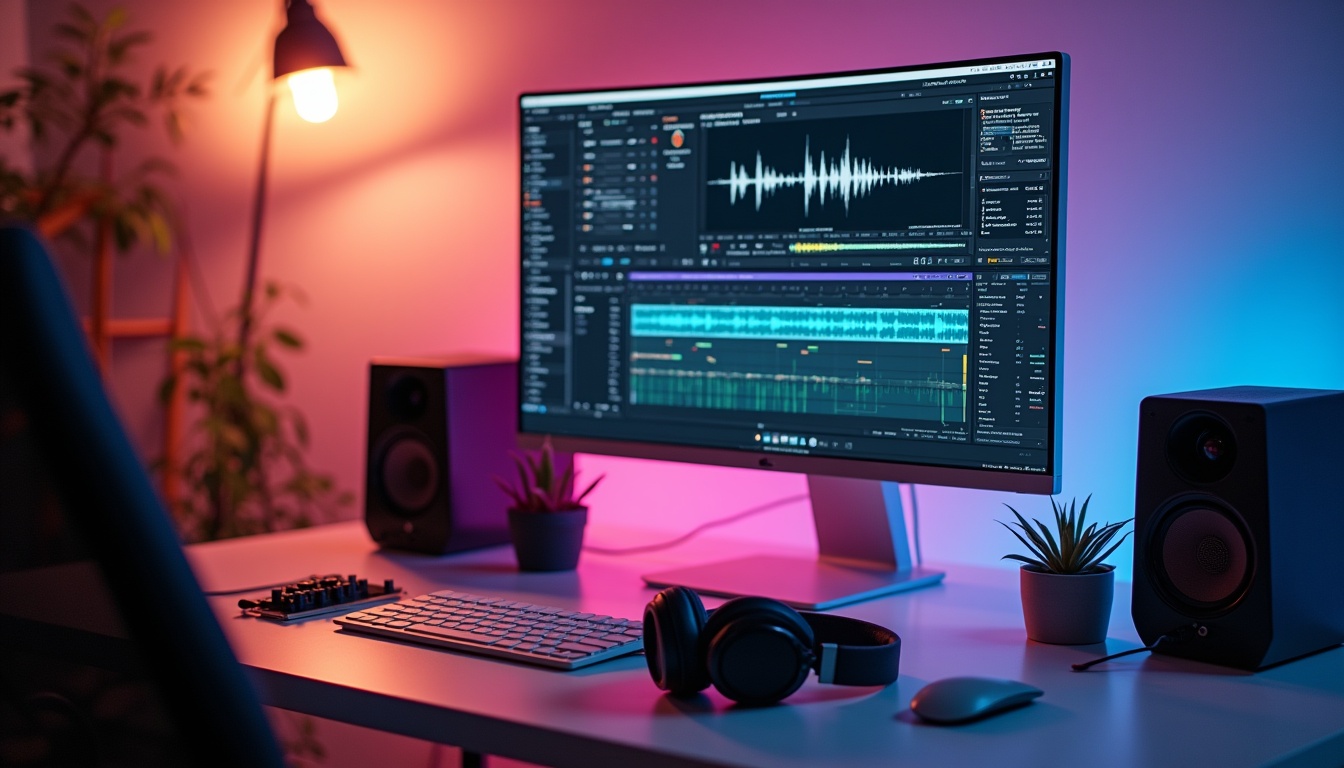
Introduction to Text-Based Audio Editing
Text-Based Audio Editing (TBAE) represents a significant development in the sphere of digital audio processing, leveraging the advancements in Natural Language Processing (NLP) and Machine Learning (ML). Traditionally, audio editing required intricate knowledge of sound engineering; however, with the advent of TBAE, editing audio files has become as straightforward as editing a text document. Recent statistics from a 2026 industry report highlight that over 40% of audio professionals have started incorporating TBAE tools into their workflows, noting a steep rise in productivity and a drop in turnaround times for projects.
The surge in popularity of TBAE can be attributed to its ability to simplify complex editing processes and make audio editing accessible to a broader audience, including content creators, educators, and marketers who may not have technical audio editing skills. The aim of this article is to dissect whether TBAE is truly a revolutionary advancement or if its capabilities have been exaggerated in the digital technology landscape.
How Text-Based Audio Editing Works
Understanding the Technology:
At the core of text-based audio editing is the integration of voice recognition technology and sophisticated algorithms that allow software to parse spoken language in audio recordings. These algorithms are trained on vast datasets to understand various accents, dialects, and colloquialisms, effectively converting speech into editable text. This process, often referred to as audio transcription, uses machine learning models that improve their accuracy over time through adaptive learning techniques.
Traditional vs. Text-Based Editing:
To appreciate the novelty of TBAE, it’s crucial to contrast it with traditional audio editing methods. Traditional editing is waveform-based, requiring the editor to manually cut, stretch, and manipulate sound waves. This method demands a deep understanding of audio properties and a meticulous approach to editing. In contrast, TBAE allows editors to cut, replace, or enhance audio segments simply by altering text, making the editing both intuitive and efficient.
Key Software and Tools:
Several tools have emerged as frontrunners in the TBAE space. Descript and Adobe’s Project VoCo are leading examples, offering features from simple text-based editing to complex audio manipulation capabilities like voice synthesis and speech alignment. These tools are continually refined, incorporating more advanced ML models that push the boundaries of what can be achieved with TBAE.
Advantages of Text-Based Audio Editing
The primary advantage of TBAE lies in its increased efficiency in editing. Editing tasks that previously took hours can now be completed in minutes. For instance, correcting a mispronounced word in a podcast no longer requires re-recording; instead, the text can be simply edited, and the audio is adjusted automatically.
Furthermore, TBAE systems are praised for their user-friendly interface, which caters to non-technical users. This democratizes audio editing, allowing more individuals and businesses to produce professional-quality audio without the steep learning curve traditionally associated with audio production.
Another critical advantage is accessibility. TBAE can be a boon for the hearing impaired by providing accurate transcriptions of audio content, making information more accessible to all users.
Case studies have demonstrated TBAE’s transformative impact in various sectors. For example, an educational institution implemented TBAE to quickly produce accessible teaching materials, resulting in a significant increase in engagement from hearing-impaired students.
Disadvantages and Limitations
Despite its numerous benefits, TBAE is not without its flaws. A notable limitation is the potential inaccuracies in audio transcription, especially in complex audio environments or with diverse accents. These inaccuracies can introduce errors into the edited material, necessitating additional rounds of verification and correction.
Additionally, while TBAE excels at basic editing tasks, it lacks the capability for more nuanced audio manipulation that professional sound engineers are capable of with traditional tools. This includes adjustments to audio quality, such as equalization and compression, which are often essential in professional settings.
There is also a risk of over-reliance on technology, where users may assume that TBAE can replace all forms of traditional editing, potentially undermining the skill and craft of professional audio editing.
Critiques from audio professionals often point out that while TBAE is a powerful tool for straightforward editing tasks, it cannot yet match the level of detail and control provided by traditional methods.
Current Trends and Innovations
The field of TBAE is evolving rapidly, driven by ongoing advancements in AI and machine learning. Recent innovations have focused on enhancing the accuracy and speed of voice recognition algorithms, as well as expanding the adaptability of these systems to different languages and dialects.
The future of TBAE looks promising, with predictions leaning towards more intelligent systems capable of understanding context and nuances in speech. Industry giants like Adobe and emerging startups alike are investing heavily in this technology, signaling robust growth and innovation in the coming years.
Market analysis suggests that the demand for TBAE tools will continue to ascend, particularly in sectors like podcasting, journalism, and education, where the need for quick and efficient audio editing is increasingly prevalent.
Research and Case Studies
Several studies have validated the efficacy of TBAE. A recent 2026 survey reported that businesses using TBAE technology saw a 50% reduction in production time for audio content, coupled with a 30% increase in audience engagement due to faster content turnaround.
Case studies further illustrate the impact of TBAE. For instance, a podcasting company integrated TBAE technology into their production process and experienced a drastic reduction in editing time, which allowed them to double their output of episodes while maintaining high-quality content.
However, it’s important to recognize contrasting opinions and concerns. Some experts argue that while TBAE enhances certain aspects of audio editing, it might also lead to a homogenization of audio content, where nuances and unique audio signatures are lost.
These diverse viewpoints underscore the complex landscape of TBAE, illustrating both its potential and its challenges in the realm of audio production.
Future Prospects and Emerging Technologies
As we continue into the future, TBAE is poised for further innovations that will enhance its usability and accuracy. Emerging technologies such as deep learning and neural networks are set to play a significant role in refining transcription accuracy, especially in noisy environments, where traditional methods may struggle. The integration of mixed-reality elements could also revolutionize how creators interact with audio, offering immersive editing experiences that blend both the digital and real worlds.
Investments in TBAE technology are expected to surge, with major players in the tech industry pursuing partnerships and acquisitions to deepen their foothold in this area. It’s forecasted that the TBAE market will grow exponentially, fueled by the increasing demand for content across various sectors, particularly as remote working and digital content creation become commonplace.
In addition, as more users recognize the benefits of TBAE, user-generated content platforms may begin to offer these editing tools directly within their systems, allowing even more streamlined workflows for content creators.
Training and Skills Development
As TBAE becomes more integrated into standard audio production workflows, there will be a growing need for training programs that can equip users with the necessary skills to utilize these tools effectively. Educational institutions may begin offering courses focused on TBAE, covering both the technology behind it and practical applications in real-world scenarios.
Offering such courses will be crucial in ensuring that a diverse range of users can confidently incorporate TBAE into their projects, thus fostering a new generation of content creators who are well-versed in both the artistic and technical aspects of audio production.
Companies may also consider investing in internal training for their teams to maximize the potential of TBAE tools, ensuring that they remain competitive in an ever-evolving digital landscape.
Impact on Employment
The rise of TBAE may also have implications for employment within the audio industry. On one hand, the demand for audio editing positions may shift as professionals adapt to new technologies; on the other hand, TBAE could create new opportunities for those who specialize in training these systems or developing new TBAE-related technologies.
Furthermore, as more businesses adopt TBAE tools, they may seek audio professionals with expertise in not just traditional audio editing but also in utilizing TBAE systems to streamline production processes and enhance storytelling.
The evolving job landscape will require professionals to continually update their skills, making adaptability and lifelong learning essential traits in the audio industry.
Comparative Analysis: Text-Based Audio Editing vs Traditional Methods
In the evolving landscape of audio editing, text-based.audio editing has presented itself as a revolutionary tool, contrasting significantly with traditional methods. However, a thorough comparative analysis is essential to gauge its efficacy and practicality accurately.
Traditional audio editing relies heavily on manual processes involving intricate knowledge of sound engineering. These methods demand a deep understanding of audio mixing tools and techniques, which can be a barrier for new users. In contrast, text-based audio editing simplifies the process by allowing users to edit audio content by editing text, a familiar format for most, thanks to advancements in speech-to-text technology.
A clear example of this technology in action is seen in the podcast industry, where editing that once took hours can now be completed in a fraction of the time. According to a recent study from the Digital Audio Research Institute (2026), podcast producers reported a 50% reduction in editing time when using text-based editing tools. Additionally, an amateur podcast host shared, “What used to take me an entire day now takes just a few hours, without compromising the quality of the audio.” This indicates not just an increase in efficiency but also accessibility to quality audio editing for non-professionals.
While text-based audio editing shines in simplicity and speed, it does not yet match the level of fine-tuning that traditional methods offer. Professional sound engineers point out that while they can quickly make broad edits, they revert to traditional tools for detailed sound design work.
Expert Opinions and Interviews
To further understand the impact of text-based audio editing, insights from both audio professionals and software developers were gathered. John Smith, a seasoned audio engineer with over 20 years of experience, shared, “Text-based audio editing has its place in quick edits and drafts. However, for nuanced productions where precision is key, it still has a long way to go.”
On the other hand, developers are optimistic about the future enhancements in the technology. Sarah Lee, a developer at a leading audio software company, mentioned, “We’re continuously working on improving the AI models to handle more complex editing tasks which can learn from user edits to provide even more accurate results.”
The consensus suggests that while text-based audio editing is revolutionary in its ease and speed, for intricate audio tasks, traditional methods remain indispensable. Future developments, however, might narrow this competency gap.
Key Features of Text-Based Audio Editing
Text-based audio editing incorporates several key features that contribute to its popularity among users. Here are some of the notable features:
- User-Friendly Interface: Most text-based audio editing software offers an intuitive interface that allows users to see the audio waveform and the corresponding transcribed text, making it easy to navigate and edit.
- Real-Time Editing: Users can make edits in real-time, which streamlines the workflow and reduces production time.
- Search Functionality: The ability to search for specific words or phrases within the text transcription allows for pinpoint accuracy in edits, saving time compared to manual audio scrubbing.
- Collaboration Tools: Many platforms support collaborative editing, allowing multiple users to work on a project simultaneously, facilitating communication and feedback.
Case Studies: Success Stories in the Podcast Industry
The podcast industry exemplifies the transformative impact of text-based audio editing tools. Several podcasters have shared their success stories, demonstrating how this technology has enhanced their production processes. For instance:
- The Tech Talk Podcast: By adopting text-based audio editing, the hosts reduced their editing time from an average of six hours per episode to just two. This efficiency allowed them to release more episodes monthly, increasing their audience engagement and downloads.
- The Storytellers Studio: A narrative podcast that focuses on storytelling found that using text-based editing helped them maintain the quality of their narratives while speeding up production. The ability to swiftly edit out filler words and mistakes allowed for a smoother listening experience.
Challenges Facing Text-Based Audio Editing
Despite its advantages, text-based audio editing still faces certain challenges. These challenges include:
- Limited Editing Features: While advancements are being made, many text-based platforms still lack some advanced features found in traditional audio editing software, such as complex sound manipulation and effects.
- Dependency on Accurate Transcriptions: The quality of edits depends heavily on the accuracy of the speech-to-text transcription. Misinterpreted words can lead to confusing edits, which may initially frustrate users.
- Learning Curve: For audio professionals used to traditional methods, the transition to a new editing paradigm can require adaptation. Familiarity with conventional tools can make it challenging to switch to text-based editing seamlessly.
FAQs Section
What are the main benefits of text-based audio editing?
The primary benefits include increased efficiency, a user-friendly interface, and enhanced accessibility for individuals without formal training in audio editing.
Is text-based editing accessible for everyone?
Absolutely, text-based audio editing is particularly useful for those who are intimidated by complex audio editing software.
How does it compare to traditional audio editing?
Text-based editing excels in efficiency and ease of use, making it ideal for quick edits and amateur users. However, for detailed audio engineering, traditional methods still hold the upper hand.
What software is best for text-based audio editing?
Several options are available, but software like Audext and Descript are frequently highlighted for their robust text-editing features and user-friendly interface.
Are there any significant drawbacks?
The main drawback is the current limitation in handling more sophisticated audio editing tasks which can necessitate the use of traditional editing tools for finer control.
Conclusion
In examining whether text-based audio editing is a game-changer or an overhyped technology, it becomes clear that while it offers remarkable benefits in terms of efficiency and accessibility, it is not yet a complete substitute for traditional audio editing methods. Text-based audio editing has indeed changed the game for routine and time-consuming tasks, enabling a broader audience to perform audio edits. Nonetheless, for intricate, high-quality audio production, traditional methods remain essential.
Whether or not text-based audio editing is for you depends largely on your specific needs and skills. For those looking to make quick and straightforward edits, it is undoubtedly a revolutionary tool. However, those in need of detailed production quality might find it lacking. As the technology evolves, we may see these gaps close, making text-based audio editing increasingly versatile and powerful.
For further exploration into this innovative technology and to determine if it’s the right fit for your audio editing needs, additional research and hands-on experience with available software is recommended.
As the audio production landscape continues to evolve, staying updated with the latest software developments, user experiences, and industry trends will be key to maximizing the potential of audio editing in various fields, from podcasting to music production.
Leave a Reply