Comparison of AI TTS Power, Voices, and Deployments
Readspeaker vs ElevenLabs: a data-driven comparison of features, pricing, voices, and deployment considerations for enterprises, educators, marketers, and creators.
ReadSpeaker and ElevenLabs deliver TTS for different needs. ReadSpeaker is an enterprise-grade accessibility and education TTS provider with modules like webReader, docReader, TextAid, and embedded/edge delivery. It supports 110+ voices in 35+ languages, SSML, pronunciation dictionaries, and LMS/CMS integrations, designed for large organizations requiring compliance, accessibility, and scalable deployment. ElevenLabs is a creator- and developer-focused platform offering lifelike speech, voice cloning, dubbing, and multi-language synthesis, with 30+ languages and a growing Voice Library. It provides an API/SDK for apps, along with Speech-to-Speech, style, stability, and similarity controls, enabling fast production for marketing, podcasts, games, and localization. In 2025, the relevance stems from the demand for natural, compliant voices at scale across channels—web, apps, learning platforms, and media. ReadSpeaker is well-suited for education, public sector, and enterprises prioritizing accessibility and governance; ElevenLabs appeals to content creators, studios, localization teams, and developers needing rapid, expressive voice work and dubbing workflows. For teams seeking a balanced, end-to-end option with broad voice coverage and simpler pricing, Listen2It serves as a compelling alternative.
Platform Profiles
Readspeaker
Readspeaker : What Is It?
Target Audience & Use Cases:
- •Improve university accessibility with integrated webReader and LMS.
- •Automate bulk narration for e-learning courses with SSML.
- •Deploy on-premise TTS for data-sensitive government service portals.
- •Provide assistive reading tools for students with disabilities.
- •Integrate pronunciation lexicons into IVR and call systems.
Key Metrics:
- •Founded in the early 2000s, enterprise TTS veteran.
- •110+ voices across 35+ languages, product-dependent counts reported.
- •Delivery via cloud APIs, SDKs, and on-premise engines.
- •Accessible webReader, TextAid, docReader modules for institutions worldwide.
- •SSML support, pronunciation dictionaries, lexicons, and customization options.
- •Pricing is quote-based with enterprise contracts and SLAs.
Ease of Use:
ReadSpeaker requires enterprise onboarding with documentation and integrations; admins configure SDKs and scripts, while end-users receive simple, accessible web readers with playback controls, highlighting, and speed options. Implementation needs IT involvement but yields stable, compliant user-facing experiences and responsive support.
ElevenLabs
ElevenLabs : What Is It?
Target Audience & Use Cases:
- •Clone creator voices for podcast episodes and ads.
- •Produce multilingual dubbing for videos with synchronized prosody.
- •Generate character voices for indie games and animations.
- •Create audiobooks rapidly with consistent, expressive narrator voices.
- •Integrate API into content pipelines for automated TTS.
Key Metrics:
- •Founded in 2022; adopted by creators and developers.
- •Supports 30+ languages with cross-lingual voice cloning capabilities.
- •Stock voices plus community Voice Library with thousands.
- •VoiceLab cloning, Speech-to-Speech, dubbing, and API access available.
- •Free tier available; paid plans scale by characters.
- •Usage popular among podcasters, studios, game developers, localization.
Ease of Use:
ElevenLabs features an intuitive web studio for fast voice experimentation; creators can clone voices and tweak stability and prosody. Developers use a straightforward REST API and SDKs. Low setup friction enables rapid prototyping, iteration, and content pipeline integration for teams.
Feature-by-Feature Comparison
Here’s how Readspeaker and ElevenLabs stack up, category by category:
| Feature | Readspeaker | ElevenLabs |
|---|---|---|
| 1. Ease of Use & Interface | The admin interface requires initial setup via scripts, SDKs, or enterprise onboarding but provides clear dashboards for managing accessibility features and deployments. End users receive simple web reader controls with playback, speed, highlighting, and download options where enabled, and training and documentation support institutional rollouts. | The studio-style web app enables fast voice generation and cloning with minimal setup and intuitive style controls, while creators iterate using instant previews and presets. Developers can integrate via a REST API and SDKs for Python and JavaScript, allowing rapid prototyping without heavy engineering overhead. |
| 2. Features & Functionality | • Provides webReader, docReader, and TextAid modules for on-page reading and assistive features.
• Supports SSML for speech markup and includes pronunciation dictionaries and lexicon management.
• Offers batch synthesis and REST APIs for automated content-to-audio workflows.
• Provides on-premise and edge deployment options for regulated or low-latency environments.
• Includes synchronized highlighting and text-audio playback to support comprehension and accessibility.
• Focuses on stable, consistent voice output optimized for clarity rather than hyper-expressive timbre. | • Delivers high-fidelity, natural-sounding voices with advanced prosody modeling.
• Offers custom voice creation and cloning through a voice-lab workflow on paid plans.
• Provides speech-to-speech and dubbing capabilities for cross-lingual localization workflows.
• Exposes fine-grained parameters such as stability, similarity, and style for voice tuning.
• Maintains a community voice library alongside stock voices for rapid selection and iteration.
• Supplies a REST API and SDKs for programmatic generation and pipeline automation. |
| 3. Supported Platforms & Integrations | • Integrates with LMS platforms such as Canvas, Blackboard, and Moodle via plugins or site scripts.
• Provides SDKs and REST APIs for web, mobile, and server integration.
• Supports IVR, call center, kiosk, and embedded system deployments through server and edge options.
• Offers CMS integration capabilities and on-page scripts for accessibility toolbars and widgets. | • Provides a REST API with SDKs for Python and JavaScript to integrate into applications and pipelines.
• Exports standard audio formats for use in video, podcast, or game production workflows.
• Integrates into developer CI/CD and content pipelines via API keys and programmatic endpoints.
• Enables third-party tooling integration through community plugins and exporter tools for common platforms. |
| 4. Customization Options | • Supports SSML tags to control pauses, emphasis, pitch, and speaking rate in generated speech.
• Includes pronunciation dictionaries and lexicon editors for consistent rendering of names and terms.
• Offers enterprise-grade custom voice development through vendor-led engagements for brand voices.
• Enables reading-mode options such as highlighting, adjustable playback speed, and text chunking for comprehension.
• Provides centralized configuration to ensure consistent voice selection and behavior across sites and courses. | • Enables custom voice cloning from user-supplied samples on paid plans for branded voice creation.
• Offers style and emotion controls to tune expressiveness and delivery of generated audio.
• Provides parameters for stability and similarity to balance creativity and voice fidelity.
• Supports speech-to-speech workflows that preserve voice characteristics while translating languages.
• Allows iterative voice engineering through a web studio with downloadable artifacts for production use. |
| 5. Pricing & Plans | • Uses quote-based pricing tailored to organization size, selected products, and required SLAs.
• Licenses and billing commonly vary by product, such as webReader, docReader, or API usage metrics.
• Contracts are frequently multi-year and include implementation, training, and deployment services.
• Pricing transparency is lower than consumer tools and typically requires sales engagement for exact terms.
• Enterprise offerings include options for service level agreements and dedicated support packages. | • Offers a free tier with a limited character quota for trial and evaluation.
• Provides paid monthly plans that scale by character limits and unlock advanced features.
• Custom voice creation and higher usage quotas are available on paid plans and add-on packages.
• Enterprise plans include advanced security, contractual SLAs, and account management for larger customers.
• Billing is predictable with monthly subscriptions and additional character bundles available for bursts in usage. |
| 6. Customer Support | • Provides dedicated account management and onboarding for enterprise and education customers.
• Offers implementation assistance, training sessions, and technical documentation for deployments.
• Supplies contractual SLAs and escalation paths for contracted customers requiring guaranteed response times. | • Maintains a comprehensive documentation center and tutorial resources for self-service support.
• Offers email and ticket-based support with faster response levels available on paid tiers.
• Provides enterprise-grade support and contractual SLAs for customers on negotiated plans. |
| 7. User Experience & Performance | • Delivers clear, intelligible speech optimized for comprehension and accessibility-focused workflows.
• Maintains stable performance and predictable latency in LMS and large-site deployments.
• Scales to enterprise workloads with cloud and on-prem deployment models available for regulated environments.
• Voices tend to prioritize neutrality and clarity over highly expressive or character-driven performances. | • Produces highly natural and emotionally expressive speech suitable for creative content and narration.
• Enables rapid generation with near-instant previews for fast iteration cycles during production.
• Supports multilingual dubbing workflows with alignment tools for translated audio tracks.
• Community-contributed voices can vary in quality and may require curation before production use. |
Readspeaker vs ElevenLabs: The Ultimate Comparison
Pros & Cons Table
Readspeaker
 Pros
Pros
- Enterprise-grade accessibility tools for web, documents, and apps
- Offers cloud APIs plus on-premise and edge deployment
- Strong LMS and CMS integrations for education institutions
- Accessibility-focused features including highlighting, pronunciation, and editing controls
- Longstanding vendor with procurement and institutional deployment experience
 Cons
Cons
- Pricing typically quote-based with limited public plan details
- Enterprise implementations often require IT involvement and setup
- Less emphasis on expressive, studio-style voice controls features
- Community voice marketplaces and cloning tools are limited
- Advanced creative dubbing workflows less prominent in lineup
ElevenLabs
Pros
- Creator-first platform known for highly natural voice synthesis
- Provides instant custom voice cloning and VoiceLab tools
- Strong dubbing and multilingual speech workflows for creators
- Fine-grained controls for style, stability, and similarity parameters
- Rapid web studio and API for fast iteration
Cons
- Voice cloning raises governance and consent management concerns
- Important features and quotas vary across pricing tiers
- Lacks out-of-the-box accessibility widgets focused on compliance standards
- Community voice library quality varies and needs curation
- Enterprise-grade on-premise deployment options are less common today
Listen2It is the go-to AI voice platform for fast, natural-sounding speech across projects.
Alternatives to Readspeaker and ElevenLabs
Bringing innovation, accessibility, and studio-quality voices together for creators, teams, and enterprises.
Why Choose Listen2It?

Effortless Usability
Clean UI, with drag-and-drop workflow for voiceovers, podcasts, and audiobooks.

Advanced Features
Choose from 600+ AI voices in 80+ languages, with natural-sounding emotional intonation and regional accents.

Cost-Effective Plans
Flexible pay-as-you-go and affordable subscriptions, with all premium voices included—no surprise fees.

Speed & Performance
Lightning-fast rendering, even for long scripts or audiobooks. Cloud-based—no software install needed.

Collaboration & API
Multi-user workspaces and robust API for automation or large-scale projects.
Security & Compliance
GDPR-compliant, secure cloud storage, dedicated support.
When is Listen2It better?
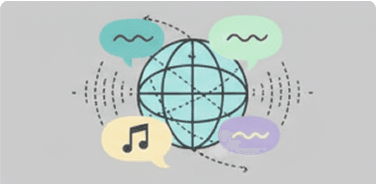
If you want more global language coverage or unique voices
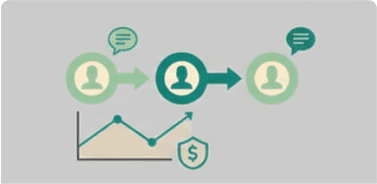
If you need a platform for both high-volume and one-off projects
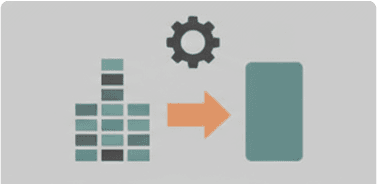
If you value seamless workflows and team features without a steep price tag
Security, Privacy, & Compliance
Readspeaker
- •Encrypts data in transit using TLS protocols.
- •Processes user data according to GDPR-aligned practices.
- •Supports institutional procurement, accessibility, and compliance workflows.
- •Provides role-based access controls and audit logging.
ElevenLabs
- •Secures API traffic using TLS and encryption.
- •Processes content under privacy policies emphasizing consent.
- •Provides enterprise agreements and compliance review options.
- •Supports API keys, team permissions, and auditability.
Use Cases: Which Tool is Best for You?
Readspeaker
Choose Readspeaker if:
- •Embed webReader to provide accessible website narration, highlighting for users
- •Generate bulk course narration for LMS integration with pronunciation control
- •Deploy on-premise TTS for IVR and call-centre regulated deployments globally
- •Provide accessible document reading with TextAid, dictionaries, annotations, and downloads
ElevenLabs
Choose ElevenLabs if:
- •Clone voices for branded podcasts, ensuring consistent tone and delivery
- •Localize marketing videos using AI dubbing with multilingual natural-sounding voices
- •Create expressive, emotional character voices for games using voice cloning
- •Produce audiobooks rapidly using high-fidelity narration, cloning, and style controls
User Reviews & Real-World Feedback
Readspeaker
What Users Like About Readspeaker
“University accessibility officer using webReader for students, appreciates highlighting and stability, but deployment required lengthy IT coordination.”— Maria L., Accessibility Officer
“Higher-ed LMS admin integrating TextAid for course narration, likes pronunciation control, but voice expressiveness feels limited overall”— Daniel K., LMS Administrator
ElevenLabs
What Users Like About ElevenLabs
“YouTube creator producing episodic content, voice cloning sped our workflow, outputs are natural, occasional stability quirks persist.”— Sofia M., Video Producer
“Indie game developer building characters, loved expressive prosody and dubbing, but licensing governance and quotas needed clarity.”— Ravi P., Game Developer
Conclusion
Final Thoughts: Both Readspeaker and ElevenLabs are strong text-to-speech solutions, but they cater to different audiences and needs.
- •Choose Readspeaker if you require enterprise-grade accessibility tooling, LMS and CMS integrations, on-prem or cloud deployment options, contractual SLAs, and vendor-supported onboarding for large education, government, or regulated deployments.
- •Opt for ElevenLabs if your focus is on ultra-natural, expressive voice quality, fast custom voice cloning and multilingual dubbing, developer-friendly APIs, and transparent self-service tiers for creators, podcasts, and small studios.
- •Consider Listen2It if you want the best blend of global voice options, easy team collaboration, and cost-effective plans.
Expert Recommendation
Our Verdict:
- •Need contractual SLAs, vendor onboarding, and institutional procurement support for scaled deployments? → Readspeaker
- •Need rapid iteration, community/custom voices, and clear per-character or tiered pricing with a free plan? → ElevenLabs
- •See the side-by-side table and deep dive to decide which TTS fits your workflow.
Decision Checklist:
- •Need LMS integration, accessibility widgets, and on-prem/data-residency options? → Readspeaker
- •Need expressive voice cloning, fast dubbing workflows, and a self-serve API with tiered pricing? → ElevenLabs
- •Need the widest range of languages/voices or robust team tools? → Listen2It
Frequently Asked Questions
Ready to try the next generation of AI voices?
Start using Listen2It for free—no credit card required!